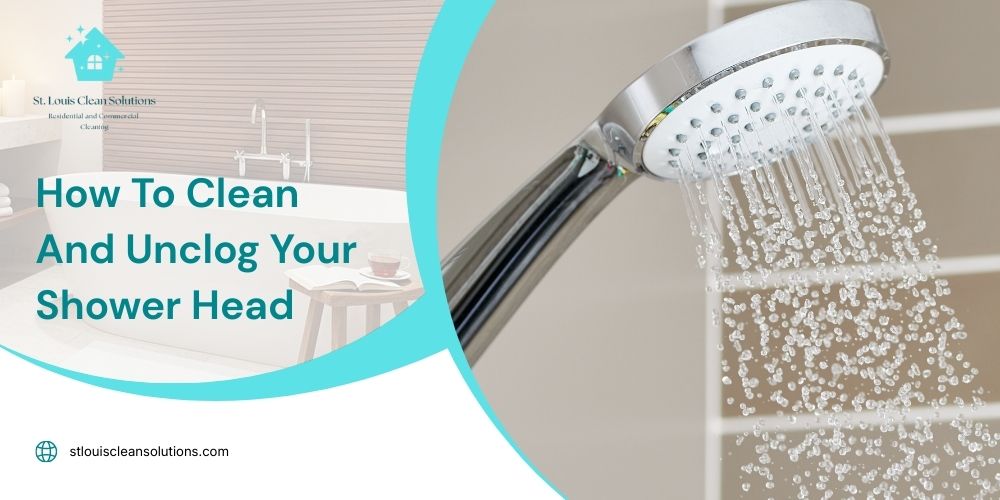
If your shower has low water pressure, sprays sideways, or feels weak, your shower head is likely clogged with hard water minerals. The good news is you don’t need to replace it. In most cases, a simple vinegar cleaning can restore strong water flow in under an hour.
This guide explains how to clean your shower head using vinegar, how to clean it without removing it, when to use commercial descalers, and how to prevent mineral buildup in the future.
How to Clean a Shower Head (Quick Answer)
To clean a shower head, soak it in white vinegar for 30 to 60 minutes to dissolve mineral buildup. Scrub the nozzles with a toothbrush, then run hot water for 1 to 2 minutes to flush out debris. This method removes limescale, restores water pressure, and improves spray performance.
Why Shower Heads Get Clogged
Shower heads clog mainly because of hard water minerals, especially calcium and magnesium. When water evaporates, these minerals harden into limescale that blocks the small spray holes. Soap scum and residue can trap additional debris, while moisture inside the fixture can allow bacteria to grow.
If left untreated, mineral buildup can damage internal components and permanently reduce water efficiency.
How Often Should You Clean a Shower Head?
Cleaning frequency depends on your water quality:
- Hard water areas: Every 1–2 months
- Moderate hardness: Every 2–3 months
- Soft water areas: Every 3–4 months
Signs your shower head needs cleaning include low water pressure, uneven spray, or whistling noises.
How to Clean a Shower Head Without Removing It
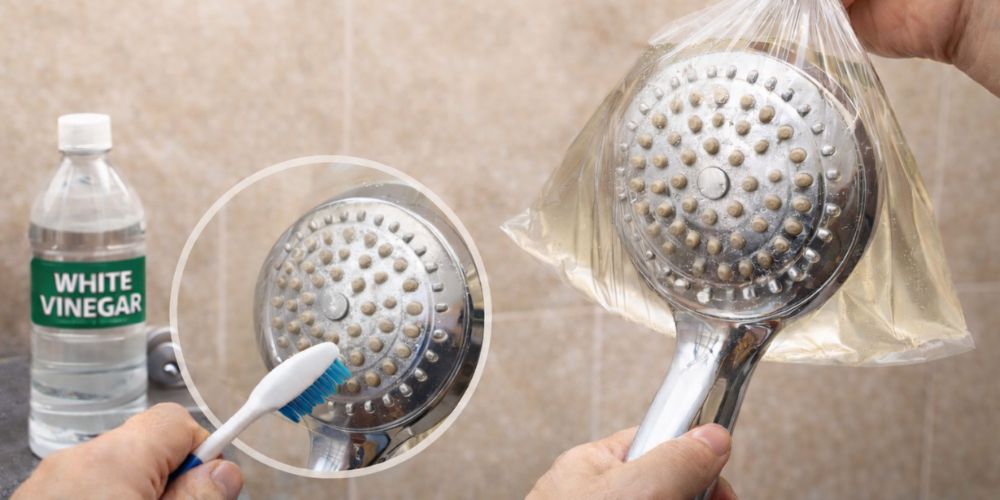
This is the easiest and most common method, especially for fixed shower heads.
What You Need
- White distilled vinegar
- Plastic bag
- Rubber band or zip tie
- Old toothbrush
Steps
- Fill a plastic bag with enough vinegar to fully submerge the shower head.
- Place the bag over the shower head and secure it tightly.
- Let it soak for 30 minutes for light buildup or overnight for heavy limescale.
- Remove the bag and scrub the nozzles gently with a toothbrush.
- Turn on the hot water for 1–2 minutes to flush out loosened debris.
The video below visually demonstrates the vinegar-soak method explained above, making it easier to follow the process step by step.
How to Clean a Shower Head by Removing It
Removing the shower head allows deeper cleaning when the buildup is severe.
Steps
- Wrap a cloth around the connector to protect the finish.
- Use an adjustable wrench to loosen and remove the shower head.
- Submerge it in a bowl of white vinegar.
- Soak for 1 to 2 hours, depending on buildup.
- Scrub the nozzles and internal openings with a toothbrush.
- Rinse thoroughly and flush with water.
- Reinstall securely, using thread tape if needed.
This approach is best when soaking alone does not restore water pressure.
How Long Should You Soak a Shower Head in Vinegar?
- Light buildup: 30 minutes
- Moderate buildup: 1 hour
- Heavy limescale: Overnight (up to 8 hours)
Avoid soaking specialty finishes longer than recommended to prevent damage.
Vinegar vs Commercial Shower Head Cleaners
Both options can be effective, depending on buildup severity.
Vinegar
- Natural and non-toxic
- Safe for most finishes
- Slower on heavy mineral deposits
Commercial Descalers
- Faster results
- Stronger on thick limescale
- May damage delicate finishes if misused
For routine maintenance, vinegar is usually sufficient.
How to Clean Different Shower Head Finishes Safely
Different finishes require different care:
- Chrome or stainless steel: Vinegar is generally safe
- Brass: Use diluted vinegar and shorter soak times
- Matte black or gold finishes: Avoid soaking; wipe gently instead
Always check manufacturer recommendations before using acidic cleaners.
How to Clean Rubber Nozzles Properly
Many modern shower heads use silicone or rubber nozzles. After soaking, gently rub each nozzle with your fingers to loosen mineral deposits. Avoid pins or needles, which can tear the material and worsen spray patterns.
How to Disinfect a Shower Head
After descaling, disinfecting improves hygiene:
- Run hot water for 2 minutes
- Optionally rinse with diluted hydrogen peroxide
- Avoid bleach unless specifically approved by the manufacturer
This step helps remove lingering bacteria and residue.
Troubleshooting After Cleaning
If problems continue after cleaning your shower head:
- Low pressure remains: Check the connector or hose for debris
- Uneven spray: Repeat soaking and scrubbing
- No improvement: Internal damage may require replacement
Severely clogged shower heads may not be salvageable.
How to Fix a Clogged Shower Head with Low Pressure
Low water pressure after cleaning often means the blockage is not only in the nozzles but also inside the shower head components. Mineral deposits and debris can collect in internal parts that control water flow, especially in hard water areas.
Check the Flow Restrictor
Most modern shower heads include a small plastic flow restrictor designed to reduce water usage. Over time, mineral buildup can partially block this piece and reduce pressure.
Steps:
- Remove the shower head from the pipe.
- Look inside the connector where the shower head attaches.
- You may notice a small plastic piece, often colored and shaped like a ring or disc. This component is the flow restrictor.
- Rinse it under warm water and gently brush away mineral deposits.
- Reinstall the restrictor and shower head after cleaning.
⚠️ Do not remove the restrictor entirely unless allowed by local plumbing regulations.
Clean the Internal Screen Filter
Many shower heads also contain a fine mesh screen that traps debris before water reaches the spray nozzles. When clogged, it can significantly reduce water flow.
Steps:
- With the shower head removed, inspect the inlet for a small metal or plastic mesh screen.
- Carefully remove it using tweezers.
- Rinse under running water and scrub gently with a toothbrush.
- Soak briefly in vinegar if mineral buildup is visible.
- Place the screen back securely, then reinstall the shower head.
Flush the Shower Pipe
Sometimes debris comes from inside the plumbing rather than the shower head itself.
- Remove the shower head completely.
- Carefully turn on the water for 30 seconds.
- Let the pipe flush out sediment before reattaching the fixture.
If water pressure improves after these steps, the problem was likely an internal blockage rather than surface limescale. If pressure remains low, the problem may be related to household plumbing or valve issues rather than the shower head.
How to Prevent Future Mineral Buildup
Preventive maintenance reduces how often you need to clean a shower head:
- Run hot water for 30 seconds weekly
- Wipe nozzles after showers
- Light vinegar cleaning once a month
- Install a water softener in hard water areas
Prevention keeps water pressure consistent and extends fixture lifespan.
Conclusion
Cleaning your shower head regularly is a simple but effective way to restore water pressure, improve hygiene, and extend the life of your fixture. In most cases, routine vinegar soaking and light scrubbing are enough to remove mineral buildup caused by hard water. When cleaning doesn’t resolve the issue, it may be time to call the deep house cleaning professionals to inspect the connected plumbing or recommend whether replacement is the better option.
Explore our cleaning resources to keep every part of your home fresh, efficient, and well-maintained.
Frequently Asked Questions
What dissolves limescale on a shower head?
White vinegar dissolves limescale by breaking down calcium and magnesium deposits. Commercial descalers also work faster for heavy buildup.
Is vinegar safe for all shower heads?
Vinegar is safe for most chrome and stainless steel shower heads. Specialty finishes may require diluted solutions or surface-only cleaning.
Can baking soda clean a shower head?
Baking soda helps scrub surface residue, but vinegar is more effective for dissolving internal mineral buildup.
Why is my shower head still clogged after cleaning?
Severe mineral buildup or internal corrosion may require repeated soaking or replacing the shower head.
Can hard water permanently damage a shower head?
Yes. Prolonged mineral buildup can corrode internal parts and reduce water flow permanently.
Why does vinegar dissolve limescale?
Vinegar contains acetic acid, which reacts with calcium and magnesium deposits found in limescale. This reaction breaks down hardened mineral buildup, allowing it to loosen and wash away during rinsing.
Can I use CLR on a shower head?
Yes, CLR can remove heavy mineral buildup, especially in hard water areas. It is generally safe for chrome, stainless steel, and plastic, but may damage brass, nickel, or specialty finishes. Always follow label directions and rinse thoroughly.
How do I know if my shower head is permanently damaged?
If water pressure does not improve after thorough cleaning, internal parts may be corroded or blocked beyond repair. Visible cracks, broken nozzles, or uneven spray that does not change after soaking are signs that replacement may be needed.
Should I replace or clean a clogged shower head?
Cleaning is usually enough when mineral buildup is the cause. Replace the shower head if cleaning does not restore water flow, internal components are damaged, or the fixture is old and heavily corroded.